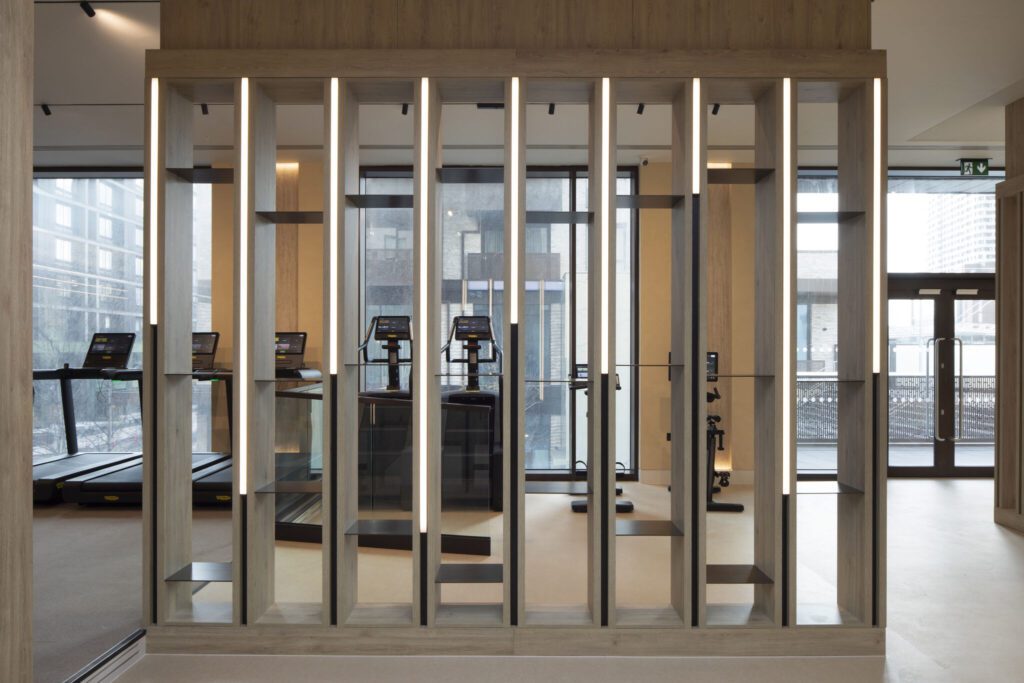
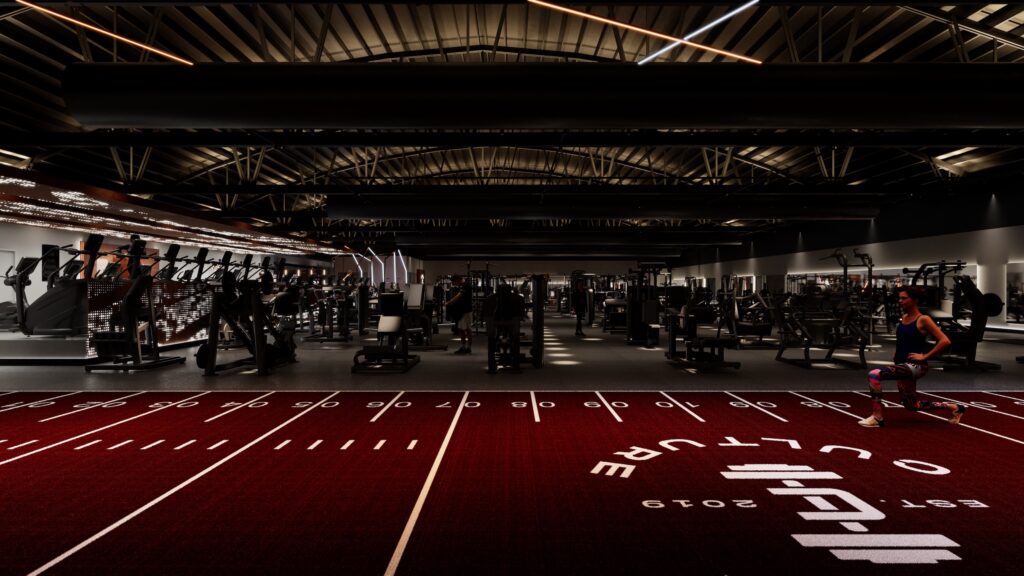
If you run an independent studio you are competing with a 20,000 square foot club down the road that charges less than you do and has a swimming pool. You will not win on range, and you should not try. You win by doing one thing better than anyone else and building a space that makes that obvious the moment someone walks in. The design job is turning a small footprint from a limitation into the reason people choose you.
This is not a big gym scaled down. It is a different discipline, and what follows is drawn from studios we have delivered between 2,000 and 9,000 square feet, most of them for independent operators rather than chains.
Design for one thing, properly
A boutique studio sells a single experience, so the plan should commit to it rather than hedging with a bit of everything. The moment you add a token weights area to a cycling studio, you have a worse cycling studio and a bad gym.
At in Rathbone Square, the brief put indoor cycling at the centre of the design and the layout, and everything else was arranged to serve it. At in Paddington, a 2,000 square foot unit was built around screen-based programming and heart rate telemetry, because that was the product. Commit, and the space explains itself.
Make every square foot earn its keep
In a small studio there is no slack, so each area has to justify itself commercially rather than simply existing. The difference between a studio that works and one that does not is usually a few square metres in the right place.
Digme’s studios ran on a deliberately conservative footprint, which meant every exercise zone had to be configured precisely to get the most out of the space operationally and commercially. That is the real constraint in boutique work. Class capacity multiplied by price multiplied by classes per day is your revenue, and the floor plan sets the first number in that sum before you have sold a single membership.
Build the brand in, do not apply it afterwards
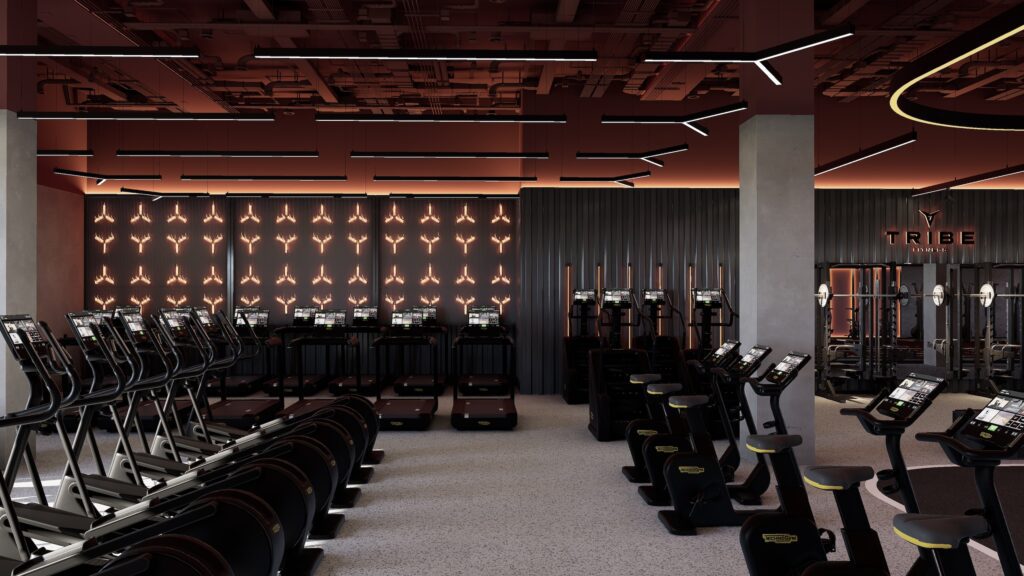
In boutique fitness the brand is the product, so it has to be designed into the material palette and the lighting rather than added as signage at the end. A studio that could be rebranded overnight has not been designed, it has been decorated.
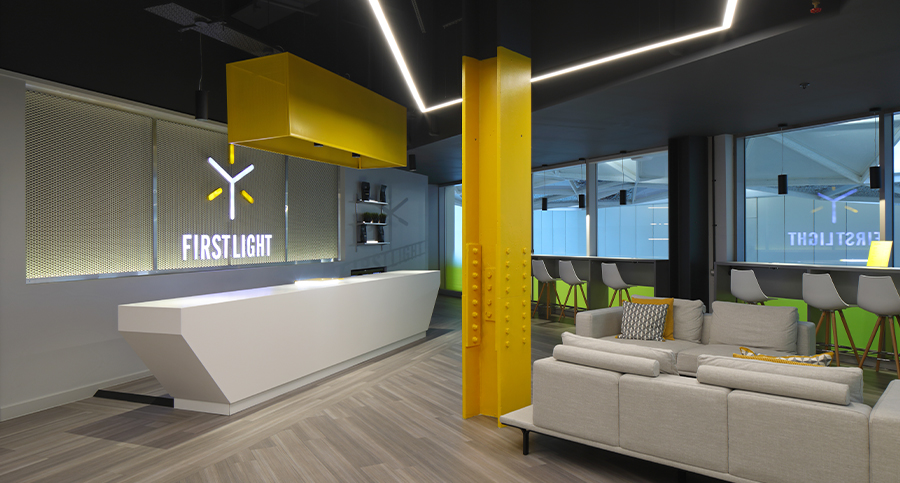
At Studio Society in Hampstead we drew the monochrome palette straight from the logo, giving the brand’s floor to ceiling cinematic visuals a backdrop that intensified them. At First Light we developed yellow and storm grey tones from the brand’s own colours, carried across concrete, timber and mesh to give an industrial scheme a premium overtone. In both, you could not lift the brand out without taking the interior with it.
Get the changing rooms right, because turnover is brutal
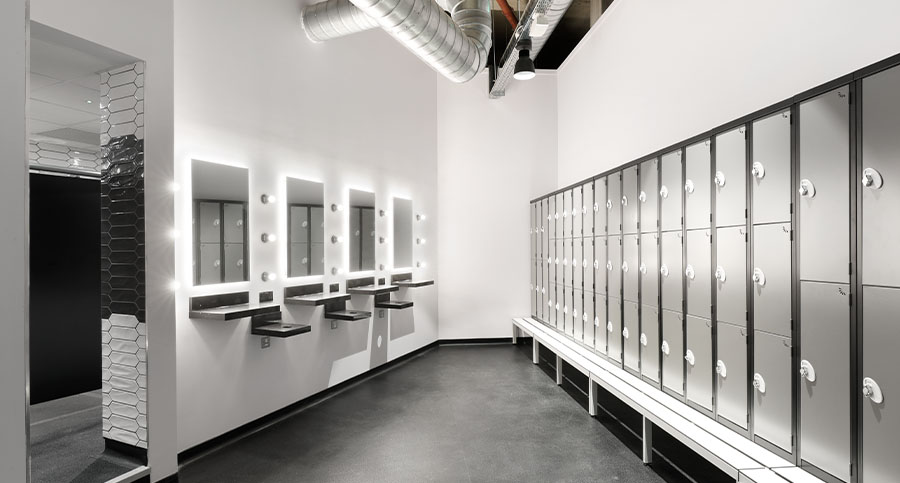
Boutique studios empty and refill on a class timetable, which puts more pressure on changing rooms per square foot than any big-box gym ever faces. Sixty people leaving as sixty arrive is a design problem, not a housekeeping one.
That means more vanity positions than the floor area suggests, circulation that does not force two streams through one door, and finishes that look considered at seven in the morning and at seven at night. It is also where members quietly judge whether your pricing is justified, which is why we treat it as part of the product rather than back of house. In a studio charging premium class prices, a cramped changing room undoes the argument the rest of the space has just made. Our piece on goes further.
Expect an awkward building, and use it
Boutique studios rarely get purpose-built space, so the ability to make an unpromising unit work is most of the job. The constraint is usually where the character comes from.
took a nondescript office and basement on Cannon Street and linked two floors into one studio for group biking, with large format graphics and high end audio visual turning a difficult volume into an immersive space. RETRA sat inside a new-build office block. A listed former tube station became a boutique studio. None of those started as good gym space, and none of them reads that way now.
What good boutique design is worth
A boutique studio lives on repeat visits, and repeat visits come from a space people want to be in twice a week rather than once. Get the concept, the capacity and the changing rooms right and the same floor area carries more classes, at a better price, with members who stay. That is what buys an independent operator, and it is why the small footprint is an advantage rather than a handicap.
If you are planning a boutique studio or reworking one