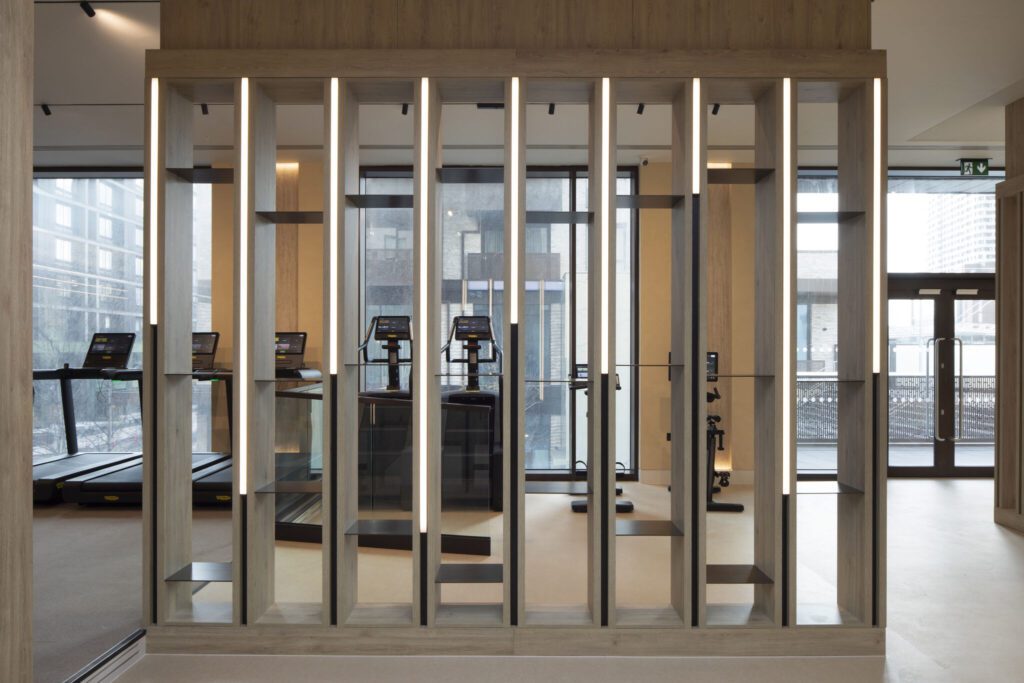
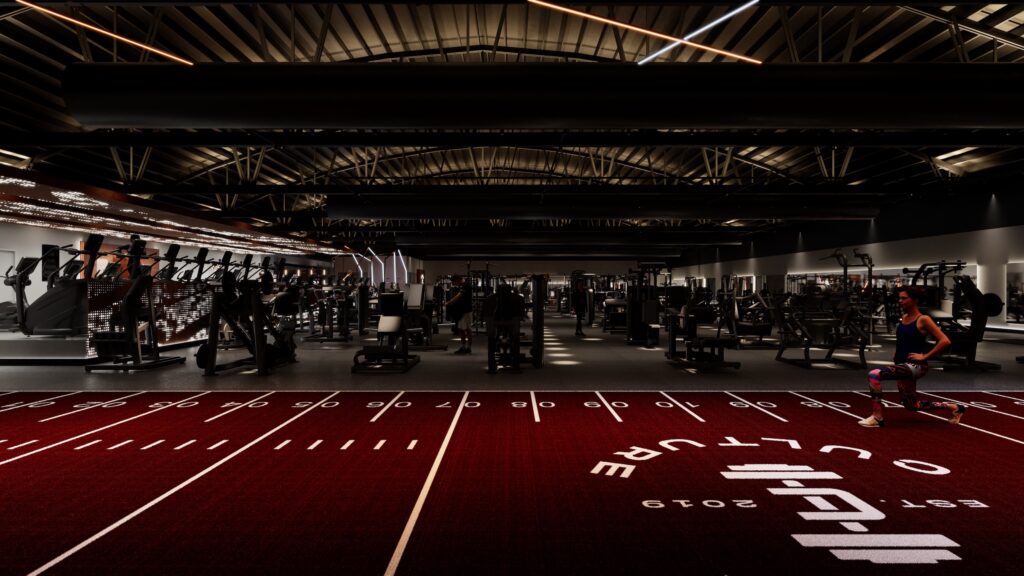
Search for gym interior design ideas and you will find thousands of images and almost no reasoning. Beautiful spaces, no explanation of why any of it works, and nothing to tell you which ideas will still be earning their keep in five years. That is a problem when you are the one signing off the budget. This piece takes five ideas we return to often, shows each one in a gym we have built, and explains what it does for the business behind it.
We are not going to tell you what is fashionable this year. Trends date, and a fit-out has to last. What follows are design moves that hold up because they change how a space is used, not just how it photographs.
Decide what the first ten seconds should feel like
Before you choose a single finish, decide what a member should feel walking through the door, because everything else follows from that. Arrival sets the expectation for the whole visit, and it is the one moment every member has, every time.
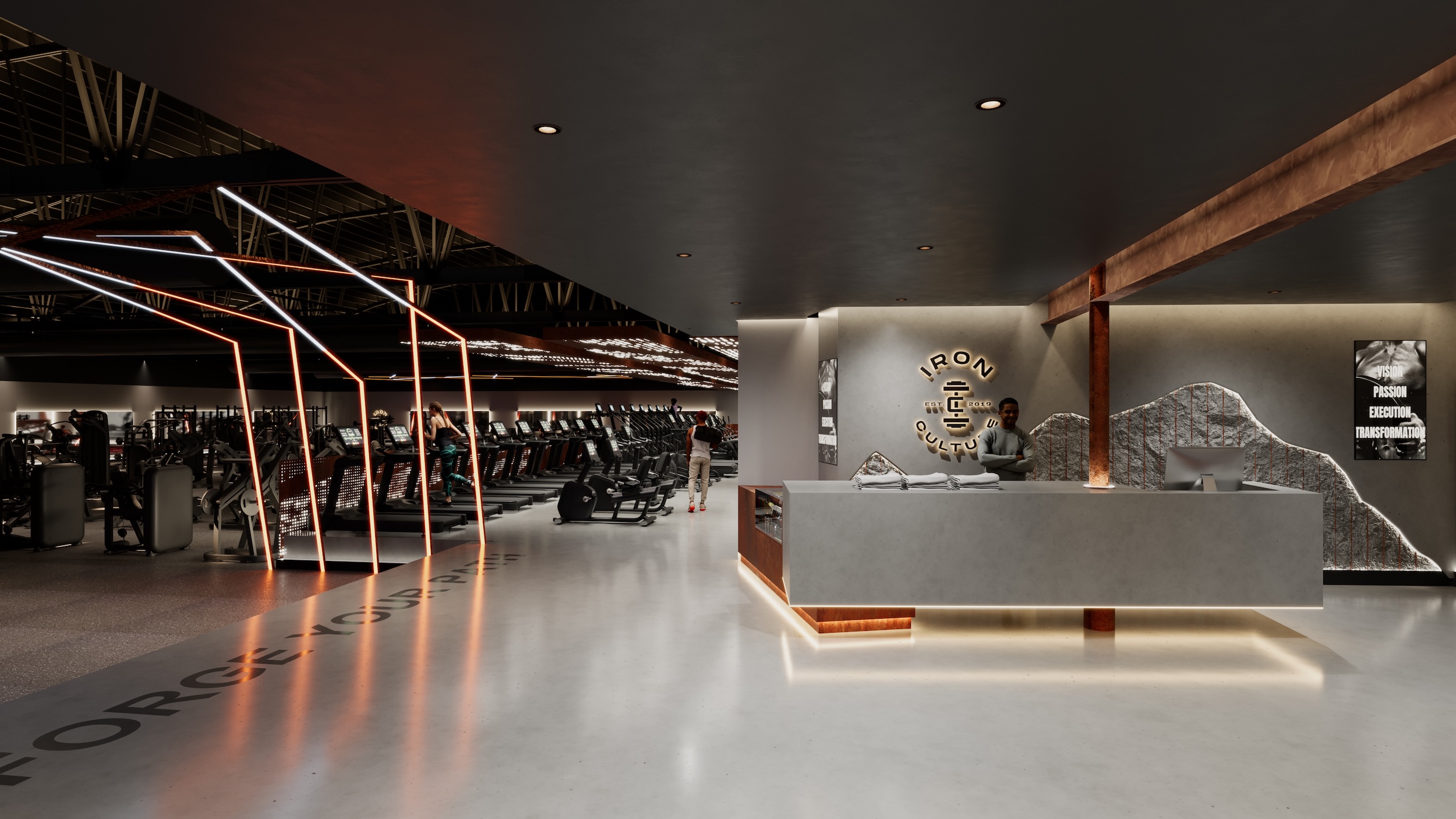
At in Paddington we built a light tunnel at the entrance. It draws you in, it marks the threshold between the street and the studio, and it gives members and staff something worth photographing, which does more for a boutique brand than any amount of paid reach. The idea works because it does three jobs at once.
Let lighting carry the atmosphere
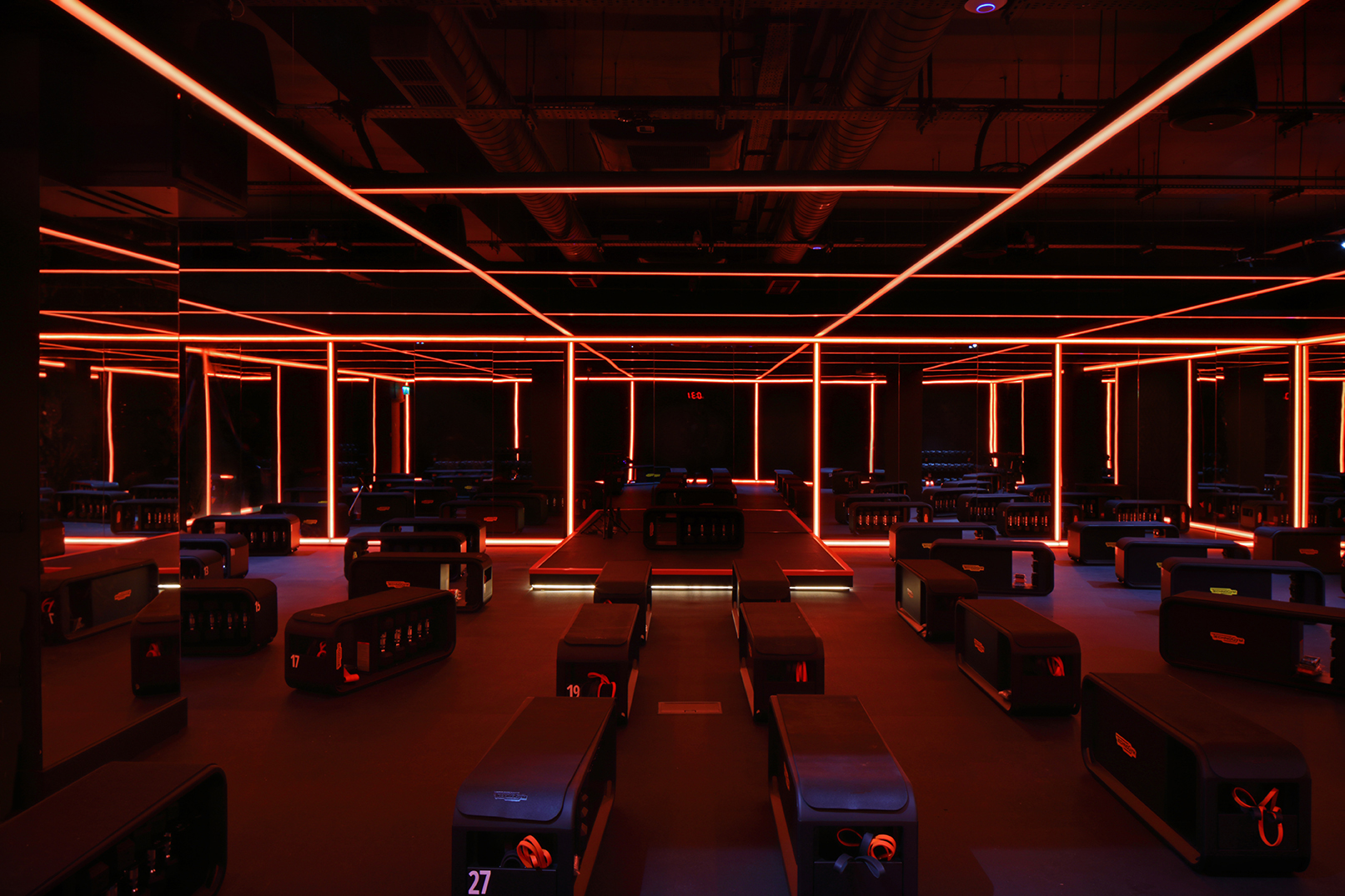
Lighting changes the perceived quality of everything else in the room, which makes it the highest-return line in most fit-out budgets. Flat, bright light throughout makes an expensive material palette look cheap. Layered light makes a modest one look considered.
At Better Gym Connswater in Belfast, a bold layered lighting feature is the centrepiece of the space, with a tonal palette set against a blue wash of light. The scheme creates energy the moment you enter, and it reinforces the operator’s brand without a single logo. If you want the technical side, our guide on goes further.
Choose materials that say something about the training
Material choice is where a gym either commits to a character or hedges. The strongest schemes pick a palette that matches how members are meant to feel while they train, then stay disciplined about it.
in New Jersey is a 26,000 square foot gym built around strength and intensity. The palette draws on molten metal and engineered structures: concrete, corten steel and exposed services, with immersive lighting over the top. Nothing there is decorative. It tells you what kind of training the room is for before anyone speaks to you.
Match the palette to the audience, not the category
Gyms are expected to be dark and hard. That expectation is worth challenging whenever the audience is not the one the cliché was built for.
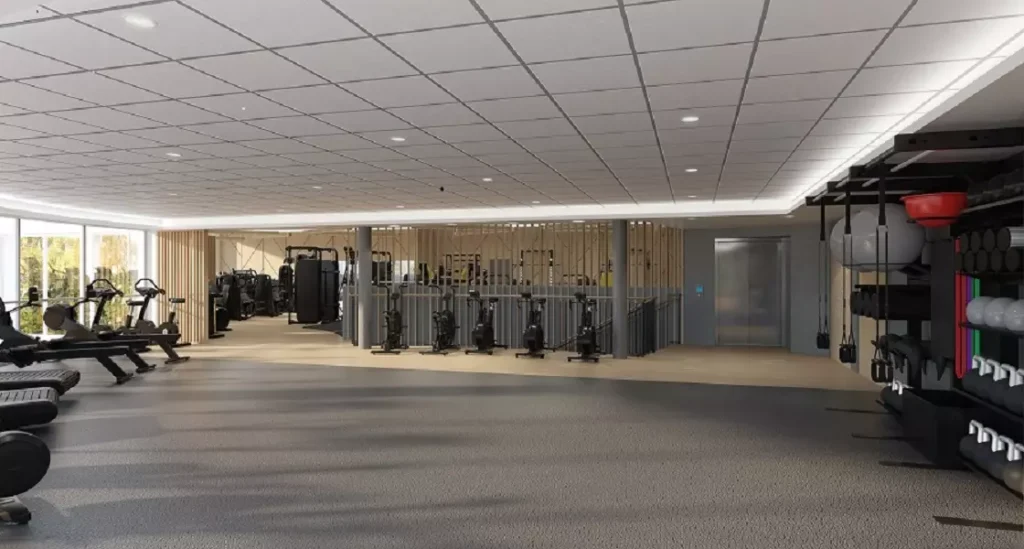
At Morrelo in Croydon, a residential amenity gym for Europa Capital, we did the opposite of the category default. Instead of the dark, hard finishes gyms usually reach for, the scheme uses muted tones and subtle textures to feel calm and contemporary, because the people using it live upstairs and judge it against their own homes. The same room in a high street club would be wrong. Context decides.
Treat the changing rooms as part of the experience
Changing rooms are where members form their view of how much you care, and they are routinely the last thing to get attention and the first to get value engineered.
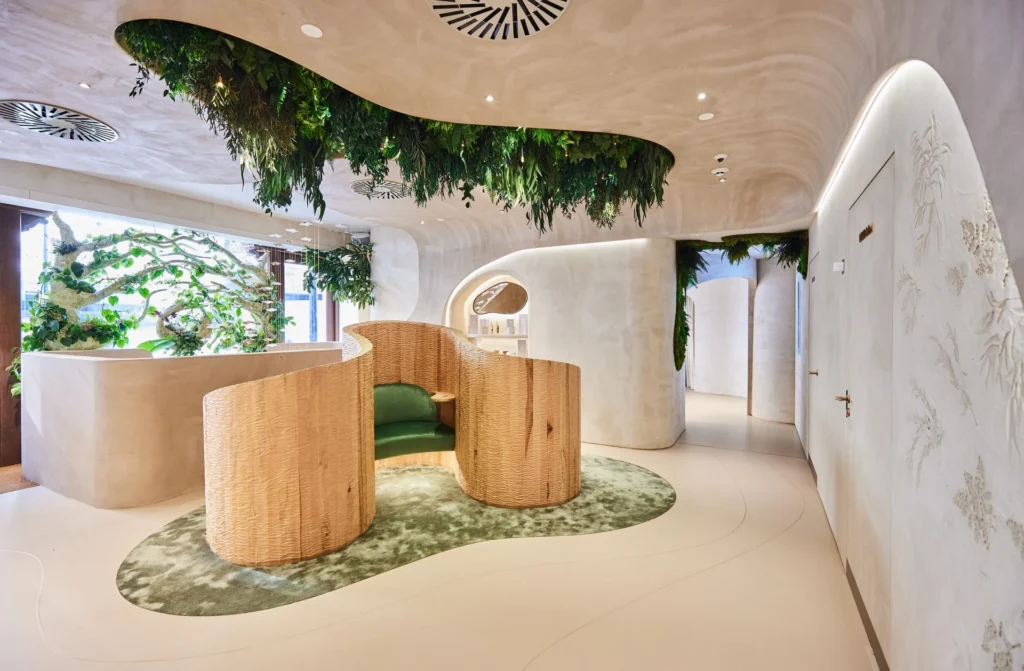
At Boostd in Zurich, a Lagree Pilates studio, the whole sequence is designed as one journey. An inviting entrance and lounge ease members in, calming neutrals are lifted by accents of purple and pink through the studio, and the changing rooms are warm and softly lit, designed as somewhere to wind down rather than somewhere to change. The end of the visit gets the same attention as the beginning, which is rarer than it should be and is usually the last thing a member remembers. For how the rest of the plan should hang together, see .
What separates an idea from a good idea
Every move above does something measurable: it shortens the distance between arriving and feeling at home, or it makes a space usable by people who would otherwise avoid it, or it saves you refitting in three years. That is the test worth applying to anything you see on a moodboard. Ask what it changes about how the space gets used, and if the answer is nothing, it is decoration.
Ideas are cheap. Ideas that survive contact with a real building, a real budget and a real membership are not, and that is the difference is actually buying you. Design that works both aesthetically and operationally is what keeps members coming back, and retention is where the return on a fit-out is really found.
If you are planning a new gym or reworking an existing one and want ideas that hold up commercially, our team can help. Get in touch to arrange an initial consultation.