If you are planning a padel club, the first question you will have asked is how many courts the building will take. It is the right first question and the wrong one to stop at, because a padel club is a hospitality business with courts in it, and the courts are the part that cannot grow. This guide sets out how we plan the whole club so it earns before, between and after the games.
We have designed padel venues from a twelve-court club at Trafford City for to in Farnham, at 60,000 square feet the largest pickleball and padel venue in the UK. We will not quote court-to-clubhouse ratios, because they vary with the site and the operator. What we can give you is the order to make the decisions in.
Count the courts last
The number of courts a building will take is decided by everything you draw around them, not by dividing the floor area by the court. A padel court is twenty metres by ten before you add the run-off, the structure, the route between courts and somewhere to wait for the previous game to finish.
At Trafford City the twelve courts were laid out to optimise space and operation together: ten sheltered and two outdoor, so the club plays all year. Draw the circulation, clubhouse, changing rooms and plant first. The court count that survives is the honest one.
Design the time between games
The courts sell in fixed slots and once they are full they are full. The revenue that grows is the time on either side of the game, so the clubhouse deserves as much design effort as the court hall, and in a well-run club it sees more of each visitor’s hour.
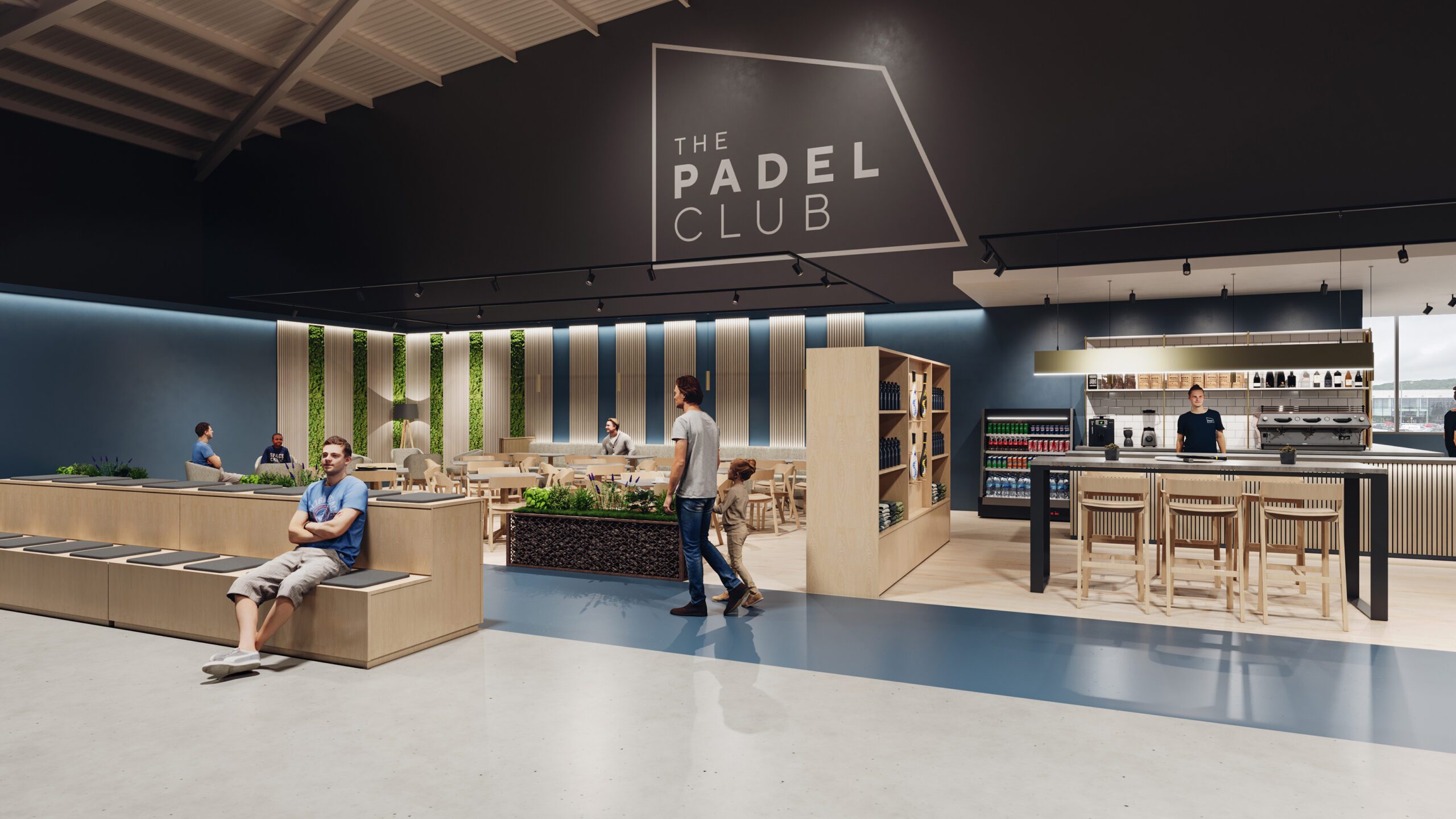
At Gloucester Quays the clubhouse was planned as the heart of the building: seating, a casual work area, retail and a café bar, arranged so players can watch, work, eat and stay. At Hurlands the same thinking produced a lounge built for work, events and downtime, and a pro shop that reads as a lifestyle store rather than a kit counter.
Light the courts for play and the club for staying
Court lighting and clubhouse lighting are two different specifications and should never share one. The court needs even, high-output sports lighting that keeps the ball visible at speed in an evening session without glare off the glass. The clubhouse needs the opposite: warmth, lower levels and contrast. At Trafford City each court is lit by dedicated sports LED while the seating around the courts sits under its own softer scheme. Spill from the courts into the lounge is the most common way a good clubhouse ends up feeling like a corridor.
Plan changing rooms and lockers for four at a time
Padel loads a changing room differently from a gym. Four players finish one court at the same minute, and in a twelve-court club that is forty-eight people at the lockers inside a few minutes. The design question is peak concurrency, not locker count, which is why in a padel club is sized to the timetable, not the membership.
Lockers follow the same logic. Most padel players arrive changed and leave changed, so the demand is bags, racquets and coats for the length of a game, held close to the courts. Day lockers in the clubhouse, sized for a racquet bag, do more work than full-height lockers behind a door.
Let the club watch itself
Padel is a spectator sport at every level, and a club that lets people watch keeps them in the building. Sightlines from reception, café and lounge onto the courts sell the sport to someone who has just walked in, give a waiting player somewhere to be, and let a small team supervise a large hall by looking rather than walking. At Gloucester Quays the main competition court carries mini grandstand seating, which turns a casual booking into an event, and the lands a new visitor in front of a game within thirty seconds.
Hurlands: the club beyond the courts
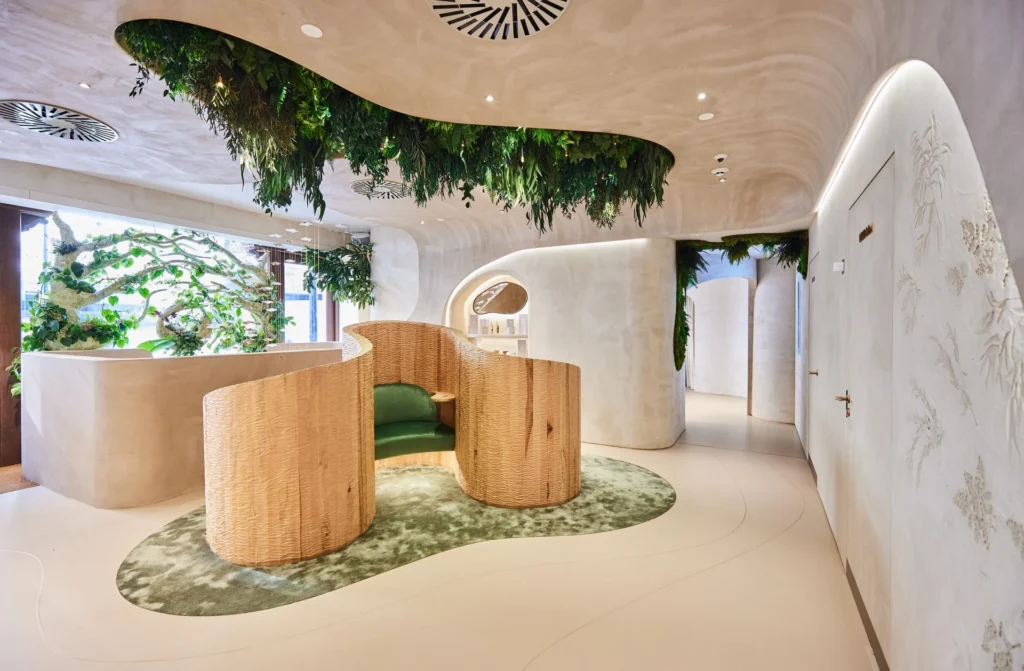
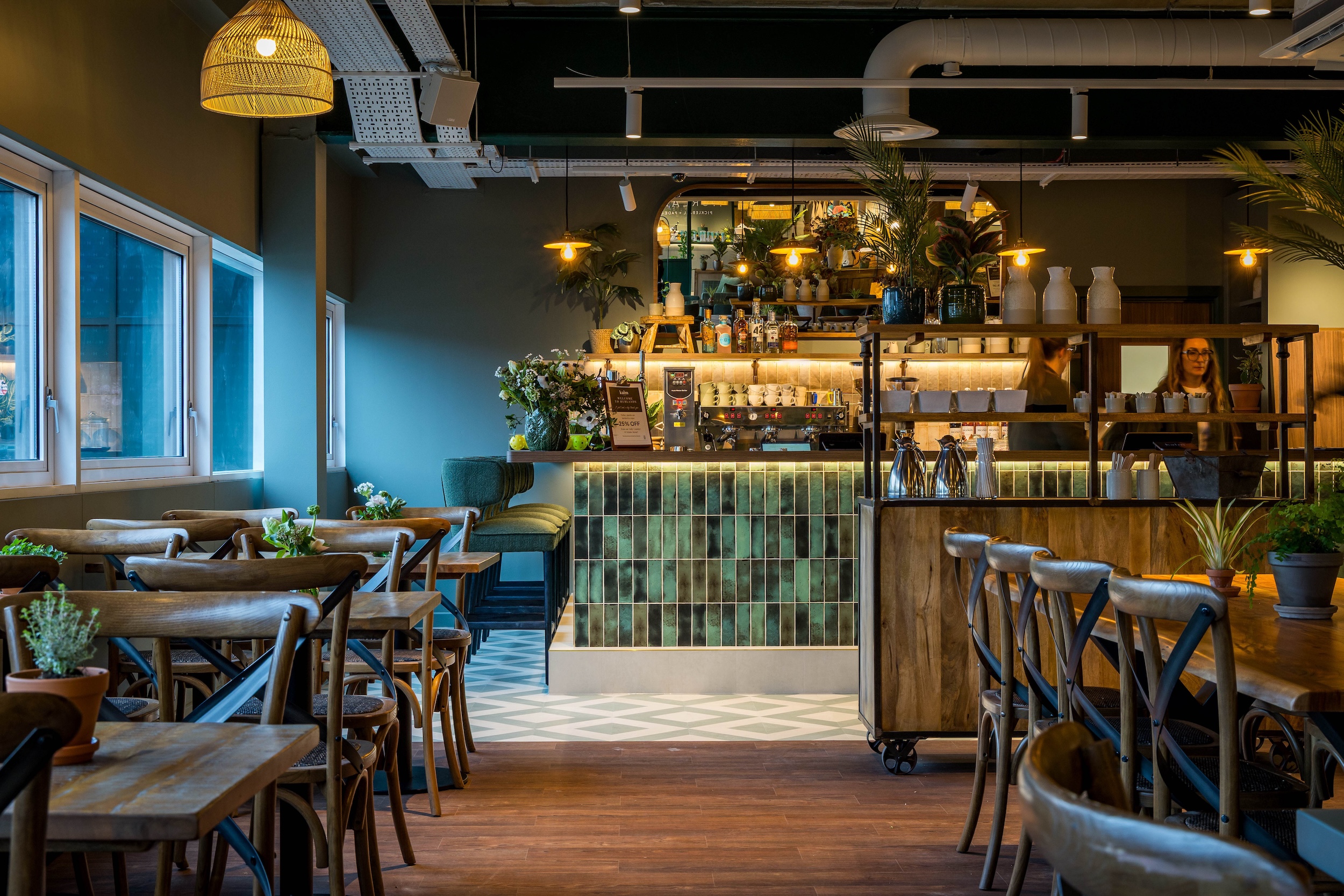
Hurlands was briefed as somewhere newcomers and experienced players would both spend the day, not just the hour they had booked. So beyond ten pickleball courts and seven padel courts sit a crafted reception, the pro shop, the lounge, two studios and treatment rooms, all drawn from one palette of Surrey Hills timber and earthy tones against the industrial frame.
The result reads as one place rather than a hall with rooms attached, where a visit can be a game, a class, a coffee and a treatment. Its founder describes it as much admired by everyone who comes through the door, and the design is what turned a court booking into a day out.
Making the courts pay
A padel club that only sells court time has a ceiling on what each visitor is worth, set by the courts and the hours in the day. A club designed around the time between games raises that ceiling with every coffee, lesson, racquet and treatment, and gives members a reason to book again rather than drift to the newer club down the road. That is where the return on is found: retention and spend per visit, not court count.
If you are planning a padel club and want the building to earn beyond the booking sheet, our team can help. Get in touch to arrange an initial consultation.